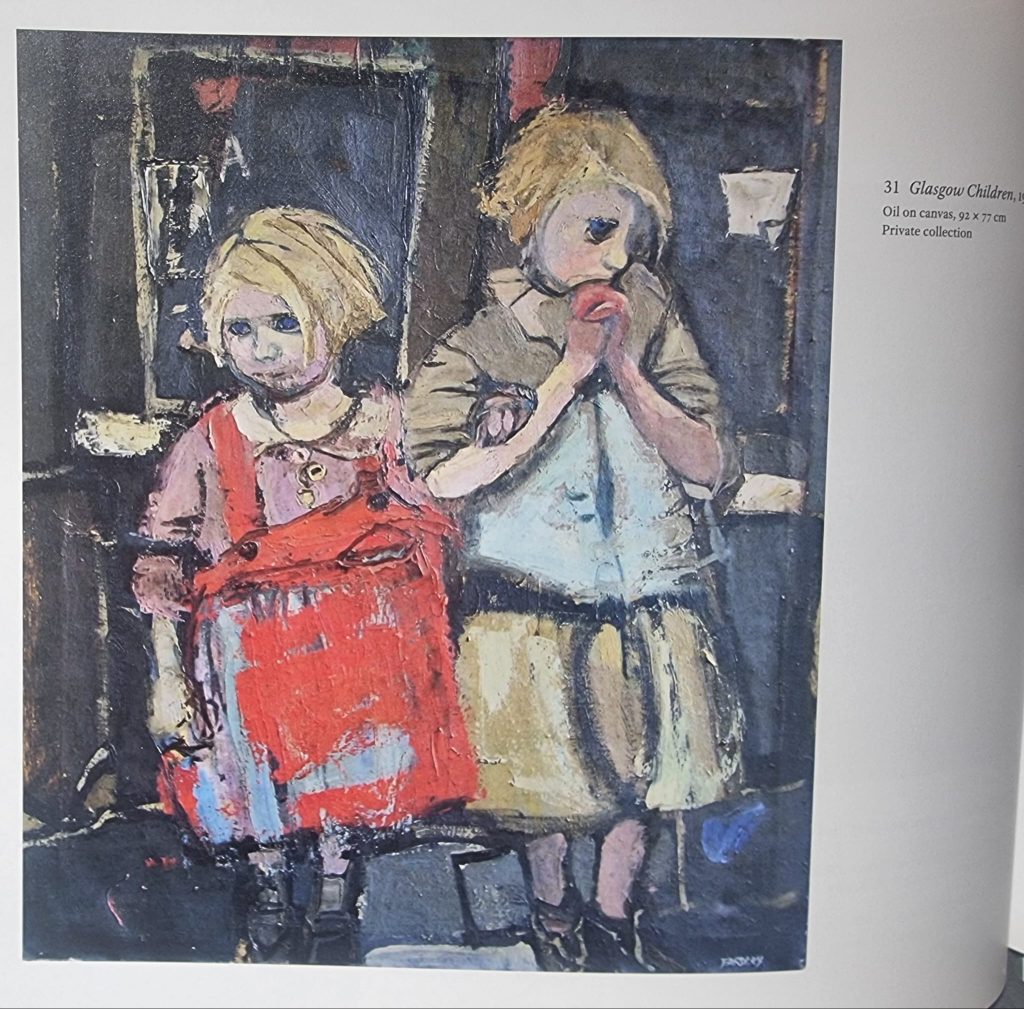
Glasgow Children, 1958, Oil on Canvas, Joan Eardley
Today we arrive at a destination of sorts in this great unfolding that we call Easter. Many of us will proclaim the age old He has risen and hear stories about an empty tomb and a cross transcended. Whether you take this literally, or figuratively is up to you, but perhaps we can agree that Christ is indeed arising – s/he is rising every where we look.
Throughout thisProost Lent journey we have heard poets and artists grappling with – and largely rejecting – the attonement theory of the cross known as substitutionary atonement. It was after all, a modern invention, but the roots of it go deep into our Christian history, perhaps even earlier than those arguments between Pelagius and Augustine of Hippo.
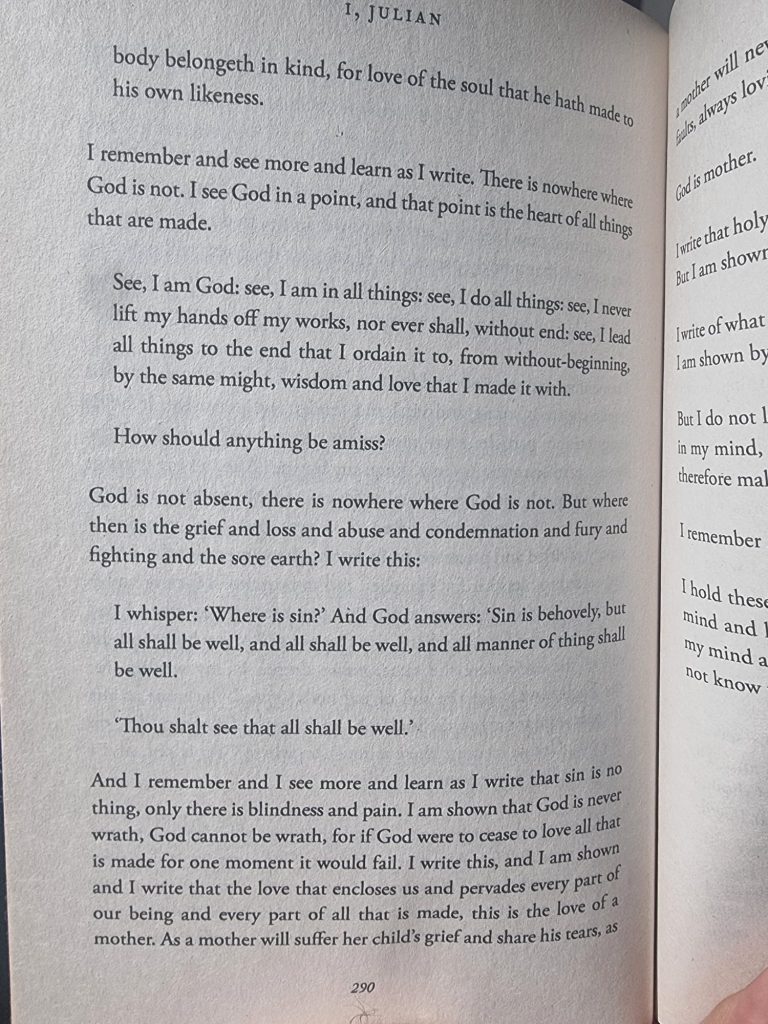
Certainly, by the time of the writings of Julian of Norwich, sin was what mattered most. In a world (like ours) riven by war and disease, the job of the Church was to call out sin and purify all heresy, such as those known as Lollards, with their unfortunate association with the Peasant’s revolt, led by Wat Tyler. It was all there- the power of Holy Church, the poverty and overburden of landless peoples, the call to freedom and the violent repression that followed. And yet at such a time as this, a woman sat in her porous cell and wrote things like this;
From ‘I Julian’ an novel by Claire Gilbert, quoting passages from Revelations of Divine Love
Some time in the late thirteen hundreds, Julian shared in her revelations what many others have expressed, both before and since.
If God is love and everything is held together by love, then God cannot also be wrath, as then everything would fall apart.
Those Glasgow children painted by Joan Eardley in all their beauty, innocence and poverty were not to be saved from their inherited sin, they were to be loved. Perhaps she knew that she was painting Christ, over and over again.
And in the end, all that is left, is Christ, which is also to say all that is left is love.
This is the culmination – the on-gping completion – of the Easter story. We are children of the living god, brothers and sisters of Jesus who shows us everything that we really are because it is all held together by love.
Three children in a tenement window, 1955-60, Gouache on paper, Joan Eardley
A decade or so ago I had a brush with death. A capsized canoe left me swimming in February waters where tides swept me out into the middle of the Firth, far from safety. I swam for an hour with no wetsuit before being fished out on the end of a wire attached to a rescue helecopter. I was fortunate in so many ways, but one image that persists when I remember that day was of birds wheeling above me as I swam for the shore, wondering if they knew I was in trouble. My resurection involved treatment for severe hypothermia, after which I shook violently for days. Many of you will have similar stories of close calls, which almost ended everything. Perhaps for some of us, those near ends were also new beginnings?
But on this dark Saturday, it is much too soon to talk about new beginnings.
The story, as it comes to us, concerns itself with failure far worse than my flounder in the Firth of Clyde.
It tells of powerlessness before a whim of Empire, whose priorities dwarfed those of the ragged radical band of love-mongers.
Trouble, even good trouble, must be swatted aside lest lowly people start to get the idea that they are carriers of the divine.
Sometimes all we have left is to surrender our bodies to the unstoppable flow.
Perhaps this is the end of everything we hoped for.
From ‘Reaching for Mercy, Proost Poetry Collection 2, 2018
Cross carved in the wall of the 7th C hermit’s cave, McCormaig Ialands, Inner Hebrides, Scotland
Today we are so grateful to The Many for sharing this beautiful offering of lament.
If you can, take some time today. Light a candle and let the Many take you on a journey. Here, we will do just that. We will share communion – in a way that feels authentic – and then we will eat a hot cross bun in gratefulness for everything that carries us forward.
“Our Last Supper” is a notable 2015 painting by artist Iain Campbell at St George’s Tron Church in Glasgow, featuring homeless individuals from Glasgow City Mission in place of Jesus and his disciples.
Today the King will toss out a few specially minted coins today as a symbol of charity to fellow man. Of course, he can afford it, and it might be a nice distraction from his troubles.
The origins of the word ‘Maundy’ seems to be obscure, but one thought is that it derives from the Middle English and Old Frenchmandé, from the Latinmandatum, the first word of the phrase “Mandatum novum do vobis ut diligatis invicem sicut dilexi vos” which many of you will of course already have correctly translated (!) into these words from John chapter 13;
‘A new command I give you: love one another. As I have loved you, so you must love one another. By this shall men know you are my disciples.’
The story comes to us that Jesus gathered with his friends for a last meal together. One of them was going to betray him, another would deny him before the night was over. After all the parables and obscure teachings he offered something unequivocal. He distilled his hopes for his friends into this one simple phrase. Then he demonstrated it as well by washing their road stained feet.
There are so many other things he could have said– stuff about saving souls, striving for correct doctrine, worshiping correctly, fighting to defend the true faith, condemning sins, particularly sexual sins, etc.. In other words, all of those things that became the preoccupation of his followers over the years to come; he chose not to mention.
So, being people who strive for integrity, how do we demonstrate love for one another? What does this look like? Can we (or others) really recognise it when we see it?
I think of my own community- a loose ragged group of people on a parallel journey. Our love is sometimes tinged with irritation, pride, ignorance. There are undercurrents that even when unacknowledged leave stains on our gatherings. The quality of our loving is imperfect, certainly less than Christ-like. I fear it might not be convincing to others who might observe from the outside.
Then I remember that gathering that Jesus had with his followers – incuding the betrayer and the denier. There was probably a grumpy and a greedy too and the odd know-it-all. The measure here is not perfection, not even excellence.
Love is not a legal transaction, it is the persistence of kindness.
Here is one of my (Chris’s) big old pots. I got excited when I made it, then when I glazed and raku fired it, I hated it. It sat in a dark corner for a while then more recently I pulled it out again and decided… that I liked it after all. I wonder if some of you other artists have had the same fluctuating relationship with your work? Perhaps this comes from the usual doubts and insecurities of most creative processes – or the way that it always feels like we are reaching for something just otside of reach.
I remembed too the words we inscribed on this pot and perhaps there is a clue here too about encounter. About how it can be useful to encounter something that is ‘other’ rather than familiar, so that we can see things differently.
Set me free so I might go to new places, there to meet people who disagree, whose circumstances dictate a shape I might never else encounter.
We are grateful for this poem from Jim Kucher today, as we look forward towards the events of the weekend to come. It is suggesting that we look beyond what we are familiar with towards a wider, more generous understanding of the Easter story.
There have been so many versions of the redemption story. It is perhaps the classic Holywood story arc on one form or another. The underdog who transcends low expectations to achieve greatness. The jock who realises that the course of true love is with the mousy (yet classically beautiful) bookish outsider. Even the antihero criminal who dies a bloody death because of a persistent honour code…
Perhaps this narrative trick is older than Jesus. Just a variation of the Hero Journey.
It seems to me that, as this Easter journey unfolds, the story-tellers and poets will be looking at the familiar narrative once more for cracks, for new angles. For a story to retain power, it needs to be encountered afresh.
Part of the problem many of us have is that religious stories – even religious hero stories – have a different life, in that one understanding of them tends to be adopted as sacred. The meaning it contains is then concreted in place and there is little room left for interpretation. Fact and myth intermingle to become scripture. Our one job is to believe it, so that redemption can happen in us as if by some heavenly magic trick.
But this is not the way of the pilgrim who is seeking after truth. Nor is this the way of the artist. For us, the path of redemption is not by settling on a textual certainty, it is more about walking a journey into the wild country that we are surrounded by.
Redemption is not the destination, it is something being worked out as we walk…
There are glimpses too of the possibility that redemption was always within us – it might be discovered on the journey, but more because it was already in us, waiting to be released. After all, we carry within us the same am-ness as all things that are or ever will be. We carry that connection to what Richard Rohr calls the Universal Christ, the god who loves things be becoming them. The Christ who is ‘another name for everything’.
In this version of the redemption story, the death of Jesus is our death.
The resurrection to come is our resurrection.
May you find glimpse of god within you on these darkened days my friend. May you find redemption.
Before we invented kings
Before we invented kings God was not our king Before we invented wars God was not our victor Before we invented empire Ours could not be holy Before we invented temples God was not confined Before we invented wealth There were no golden fleeces Before we invented priests We had no intermediary Before we invented scripture We owned our sacred stories Before we invented heaven The earth was holy ground Before we invented God We needed no religion
As you move into this week, we wanted to share with you something from Fringe Dweller, a new book by Jonny Baker and David Cotterill.
Here is what Jonny has to say.
This blog post is an extract from Fringe Dweller, a book by me (Jonny Baker) and David Cotterill. It is a series of forty reflections, practices and liturgies on Jesus’ encounters with those at the edges or through that lens. Fringe Dwelling King is a reflection based on Matthew 21:1-11 when Jesus rides into Jerusalem on a colt. In a world in which Jesus is being co-opted to nationalist and imperial agendas by those with power this book feels pretty timely. We hope you find it inspiring. The book is available from www.getsidetracked.co
Fringe Dwelling King
At the Passover the Roman Governor, comes to Jerusalem every year traveling up from the coast. There is often trouble at Passover as it’s a festival about liberation and lot of people are in the city. He enters the city from the West in a military parade with a large group of soldiers and chariots, astride a strong stallion demonstrating the imperial power of Rome which keeps the Pax Romana through fear and control. The message is clear.
Jesus enters from the opposite side of the city in an amazing piece of guerrilla street theatre, making fun of the Romans as a parody of the parade on the other side of town but also drawing on the best of the tradition. It is a mix of playfulness and improvisation but with a real significance and depth to it at the same time. It’s a piece of performance art that will be remembered for millennia to come. His disciples turn out en masse through some good community organising ready with palm branches and Jesus rides on a colt with the crowd cheering ‘Hosanna to the Son of David’. A colt has never been ridden so would be hopeless as a war horse for a king – it’s almost a piece of clowning or would fit in a comedy routine. The Son of David is the line of kingship. It’s ironic in a way because Jesus’ is so different to David who shed so much blood in his rule. By way of contrast, Jesus is a peaceful, peacemaking King who will absorb in his own body the violence of the empire and the world, the crown he wears will be a crown of thorns, and he will have a sign over his execution site saying ‘king of the Jews’. This is the Fringedwelling King whose way is not to overcome violence with violence, but it is the way of the cross and the journey to it is on a donkey. This is the Son of God in whom there is no violence.
I have always enjoyed Tom Sine’s writing. He has had a life’s love of the parable of the mustard seed, which describes what God’s kingdom is like. In one of his books he has an amazing description of the kingdom, or what he sometimes refers to as the empire of the mustard seed.
“When Jesus began teaching he made it clear that his new empire would be unlike any empire the world had ever seen. It came on a donkey’s back. Its imperial council was comprised of a handful of unemployed fishermen, a couple of IRS agents, a prostitute and some hangers on. Jesus demonstrated how to wield his imperial power by washing feet, telling stories and playing with kids. Jesus’ empire is based on the absurd values that the last should be first, losers are winners, and the most influential in the empire should clean the toilets. Members of the empire are instructed to love their enemies, forgive their friends, always give twice as much as people ask of them and never pursue power or position. Jesus insisted that those who are part of his empire shouldn’t worry about finances, but simply trust God. The resources to run this empire were basins, towels, and leftover lunches. This empire also developed a reputation for constant partying – almost always with the wrong kind of people. Seriously is this any way to run an empire? Imagine what would happen if you ran a political, economic or religious institution with these bizarre values. Clearly it wouldn’t have much of a future. These values might even get the leader assassinated.”
Liturgy: Empire of the mustard seed
Your new empire rides in on a donkey’s back
In contrast to the imperial parade on the other side of town
Seriously is this any way to run an empire?
Your imperial council is comprised of a handful of fishermen
A couple of tax agents, a prostitute and some hangers on
Seriously is this any way to run an empire?
Members of the empire are instructed to love their enemies
Forgive their friends and give twice as much as people ask of them
Seriously is this any way to run an empire?
Your absurd values are that the last shall be first
Losers are winners and the most influential people should clean the toilets
Seriously is this any way to run an empire?
Power is wielded by washing feet
Telling stories and playing with kids
Seriously is this any way to run an empire?
You insist that these who are part of the empire shouldn’t worry about finances
The resources to run the empire are basins, towels and leftover lunches
The last day of lent. Holy week unfolds from here.
Let us think of it as an open door.
Yesterday, hundreds of thousands of people walked through the steets of London to protest against the rise of far right politics. Lets think of this as an open door also.
What world are we walking out into? Much we can not control, but this is no shield against our own choices. The world at large is beyond us, but we make what is at hand. THe world of where you are and what you are within it is entirely in your hands.
This is what lent was always leading us to – the revelation that love is yours to give and yours to recieve.
May you do both.
Here is a reflection from Tim Watson, inspired by the protests in London yesterday.
Today is the day when the whole capital sees
When the whole capital hears
When the whole capital knows
The whole city is alive
People from the capital
People from every region of the nation
People from further afield
People have gathered together
And they’ve all gathered to…
Look back at the way things were
With sadness and grief and thankfulness
And to look forward to a future
To a time when things will be better
When the hurt and oppression and hate of today
Will be laid down and, in their place,
A new way will emerge
One where love and hope and grace
Will be central to the new order
And the gathered people sing
And they wave their arms above their heads
They chant and dance and cry
Friends and neighbours and strangers embrace
Laughter and song and words of hope fill the air
And in those moments division and petty rivalries…
One more day this lent seasonal journey. Almost there…
We live in a place called almost. Perhaps it has always been this way, but our culture invests a lot in creating a permanent sense of the almost. How else do we aspire? How else can we be persuaded to consume more and more? The irony here is that this kind of almost almost never leads to any real change… it just delivers a new kind of disatisfaction.
How might our lent journey be different? Perhaps there might be some value in pausing the focus on ‘next’ and spending some time instead on ‘now’.
This is not a revolutionary statement because mystics have been encouraging us to do that for a long time. Consider this familiar passage;
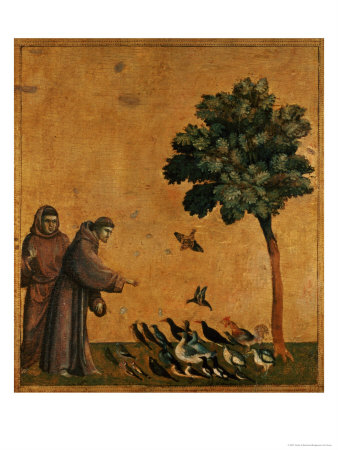
25 “Therefore I tell you, do not worry about your life, what you will eat or drink; or about your body, what you will wear. Is not life more than food, and the body more than clothes? 26 Look at the birds of the air; they do not sow or reap or store away in barns, and yet your heavenly Father feeds them. Are you not much more valuable than they? 27 Can any one of you by worrying add a single hour to your life[e]?
Matthew 6, New International Version
Mobile phones, so often regarded as problematic for our human development and awareness, are after all just tools. I still marvel at the transformation they have made to navigation. After all, I am old enough to remember driving around cities as a young social worker with something called an A to Z – a street map – open on the passenger seat. A couple of years ago I discovered one more revolutionary use for our smart phones, in the form of an app that made recordings of birdsong and told me what I was listening to. There are a few of them – perhaps you use one too.
Almost always, the first birds we hear are robins or chaffinches.
Here we then have the background thrum of jackdaws, or the high-pitched chatter of flocks of siskins.
Soon you can tell the difference between the dawn sweetness of a thrush or blackbird, and even start to make educated guesses as to which warbler or tit you are hearing.
As you stand in spring birch woods, everything is singing back at you. There is no almost, there is just now. It is enough.
The feathered Eucharist
Happy are those birds above who never go to mass - those Happy fragile feathered things with light not stained by glass. Blessed are they beak and claw, their air is ever sacred.
Blessed be their treetop temple, each twig a flying arch and sacred is each song that choirs from sparrows and from larks. Happy are the crows and cranes Whose Eucharist is endless.
And may the vaulted holy sky be full of wings as birds fly by on their way to ruffled worship.
(With thanks to Juan Raman Jimenez, ‘The Silversmith and I’.)
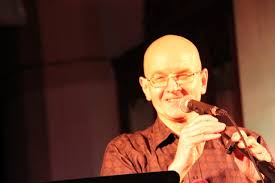
I (Chris) met Godfrey at a poetry reading around the launch of the first Proost poetry collection at Greenbelt festival. I instantly liked him for his warmth and generous spirit. I recently heard from his friend, our own Steve Page, that he had died.
We have lost a beautiful poet, musician, songwriter and community maker, but we carry him with us as we go forward.
He recorded one of his albums whilst living with incurable cancer. You can listen to this and others – and buy some – on his bandcamp site.
Here is what Steve had to say about him;
One of the joys of being included in the Proost poetry anthology: ‘Learning to Love’ was connecting with other writers who had contributed a poem or two to the collection. One such writer was Godfrey Rust, who happened to live just down the road to me; we met for a coffee and he’s been a constant in my poetry-verse ever since.
So, whilst it wasn’t unexpected, it grieved me to hear from his wife, Tessa, that after 20 months of living with cancer and squeezing every ounce of joy from the time he had left with us here, he went to join his loving God to continue the joy there. His was a resilient heart, and one who embraced a wide circle of friends and admirers, so he will be much missed. He left with us a wonderful collection of poetry and song – go to wordsout.co.uk for a taster. One of his great loves was the ‘Cafe Church’ at St. John’s Church in West Ealing, which he orchestrated for many years. This Palm Sunday we’ll be sharing some of his poems as part of the worship there – thanking our generous God for Godfrey’s generous soul.
We say It is peaceful, but this is not peace. This is just the absence of noise. Somewhere noise goes on— in the ambulance sirens, in the sweat-shops in Asia, in the veins of the addict, in the minds of the wrongly-imprisoned and the mother of the cot-death baby the noise goes on but we don't hear it. Our ears are plugged with the wax of self-importance so we say It is peaceful, but it is not God's peace. This is the peace the world gives and its real name is pride.
We say We live at peace, but this is not peace. This is just the absence of war. Somewhere war goes on— in parts of America, across much of Africa, in the streets of Baghdad and the dark estates of London the war goes on but we don't see it. We have turned our eyes away because it won't happen here, so we say We live at peace, but it is not God's peace. This is the peace the world gives and its real name is indifference.
We say He is at peace, but this is not peace. This is just the absence of life. Somewhere life goes on— in the house he never owned, in the job he almost finished, in the children he meant to talk to, in the wife he failed to love, in the father he couldn't remember and the mother he wouldn't forgive life goes on but he doesn't live it, so we say He is at peace, but it is not God's peace. This is the peace the world gives and its real name is death.
The peace of God is nothing like this. It is more like noise. It is more like war. It is more like life.
The peace of God is like the peace of the tightrope walker balancing a hundred feet above Niagara Falls.
It is in the peace of the cancer patient for whom treatment is no longer prescribed.
It is in the peace in the quiet moment after the fatal road accident.
It is in the peace of a ruined, liberated city.
It is in the peace at the centre of the whirlwind that tears the island to pieces.
It is in the peace at the opening of the gates of Auschwitz.
It is the peace of the man who has lost everything so has nothing else to lose.
It is the peace of Stephen as the first stones bruise his body
It is the peace of Gethsemane, saying Nevertheless your will be done.
It is the peace of the carpenter as he steadies his hammer for the last blow on the nail.
It is the peace of the women on their necessary business in the desolate dawn.
A meditation for a service at St John's, West Ealing during Lent in March 1991.
To provide the best experiences, we use technologies like cookies to store and/or access device information. Consenting to these technologies will allow us to process data such as browsing behaviour or unique IDs on this site. Not consenting or withdrawing consent may adversely affect certain features and functions.
Functional
Always active
The technical storage or access is strictly necessary for the legitimate purpose of enabling the use of a specific service explicitly requested by the subscriber or user, or for the sole purpose of carrying out the transmission of a communication over an electronic communications network.
Preferences
The technical storage or access is necessary for the legitimate purpose of storing preferences that are not requested by the subscriber or user.
Statistics
The technical storage or access that is used exclusively for statistical purposes.The technical storage or access that is used exclusively for anonymous statistical purposes. Without a subpoena, voluntary compliance on the part of your Internet Service Provider, or additional records from a third party, information stored or retrieved for this purpose alone cannot usually be used to identify you.
Improving Our Services
The technical storage or access is required to create user profiles to send advertising, or to track the user on a website or across several websites for similar marketing purposes.