
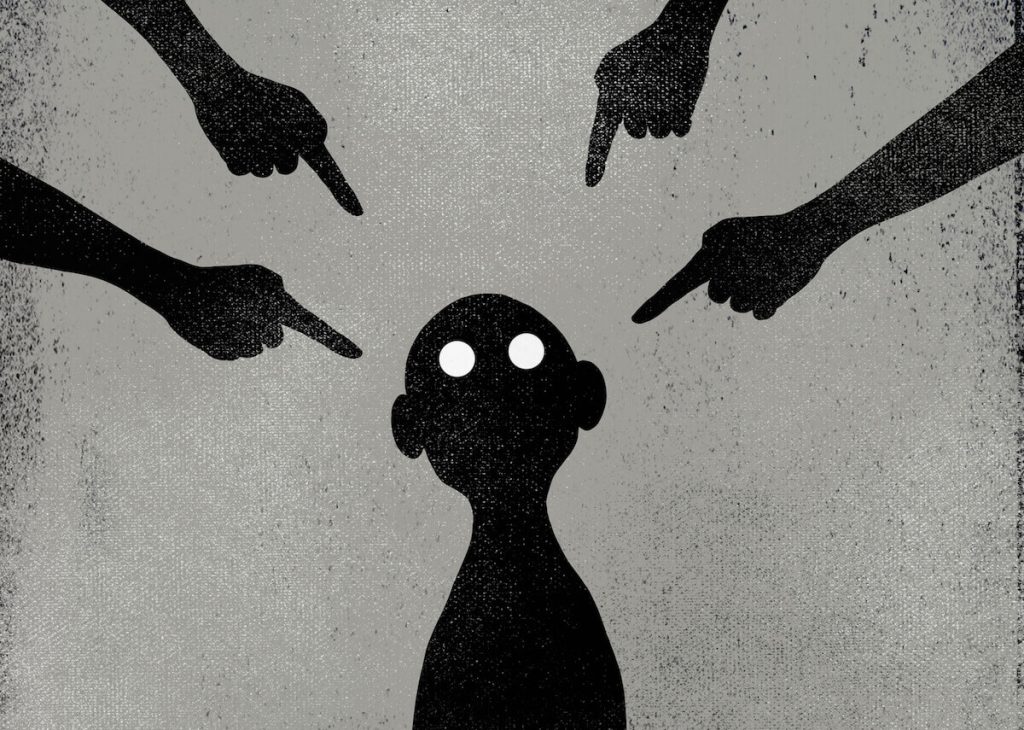
It is a commonly shared myth that the phrase ‘do not fear’ or similar appears in the Bible 365 times. Whilst this is not true – the actual figure being closer to 100 – there is no doubt that this is a common invocation ascribed to the divine throughout the sweep of the Christian canon. Think of Jesus calming his disciples in the stormy fishing boat, or those meetings after his death, during a time of persecution and state sponsored murder.
Why so many times? After all, the number of verses so many accept as authority for condemnation of same sex relationships amounts to perhaps three?
Could it be that fear is one of the most common ways that power uses to shape others to its bidding? This is true of both secular powers, with their secret police and their tanks, but also of religious powers, who set themselves up as arbiters of eternal damnation or salvation.
If we are to live towards a New Kingdom, based on justice, love and peace, we must also do so with boldness. If love is to be active, not just passive, it will always face opposition from those people or powers who object to the absurdity and generosity of love.
I think of this regularly in relation to the wars we are seeing waged in the middle east. How are they made acceptable if not by convincing people that there are reasons to be afraid? When we are afraid we appear much more willing to compromise our compassion.
What art – what substance of goodness – ever came from fear?
When we feel the shadow of fear, if we take the words of the Bible to heart, our challenge is not to seek places of walled protection, not to close down compassion, not to start a counter-offensive, but rather to once more seek the meaning of love. This feels more important than ever.
We might also learn this from another one of those Sufi poets. This time, Yunus Emre – (1241 – 1321 ce). Yunus’ poetry made a great impact on Turkish culture, but his poetry is hardly known here in the West. The poem below (and our resistence to the gospel of fear and bondage) might suggest this should change.
The drink sent down from Truth,
we drank it, glory be to God.
And we sailed over the Ocean of Power,
glory be to God.

Beyond those hills and oak woods,
beyond those vineyards and gardens,
we passed in health and joy, glory be to God.

We were dry, but we moistened.
We grew wings and became birds,
we married one another and flew,
glory be to God.

To whatever lands we came,
in whatever hearts, in all humanity,
we planted the meanings Taptuk taught us,
glory be to God.

Come here, let's make peace,
let's not be strangers to one another.
We have saddled the horse
and trained it, glory be to God.

We became a trickle that grew into a river.
We took flight and drove into the sea,
and then we overflowed, glory be to God.

We became servants at Taptuk's door.
Poor Yunus, raw and tasteless,
finally got cooked, glory be to God.

     Yunus Emre, translated by Kabir Helminski and Refik Algan - 'The Drop That Became Sea'

