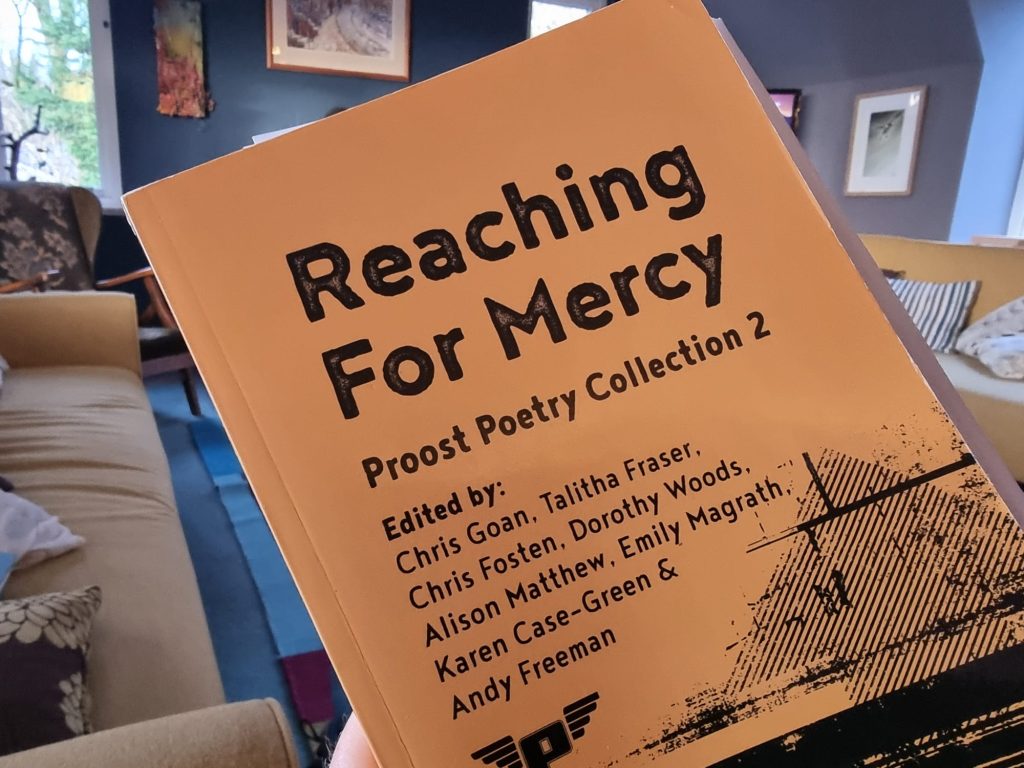
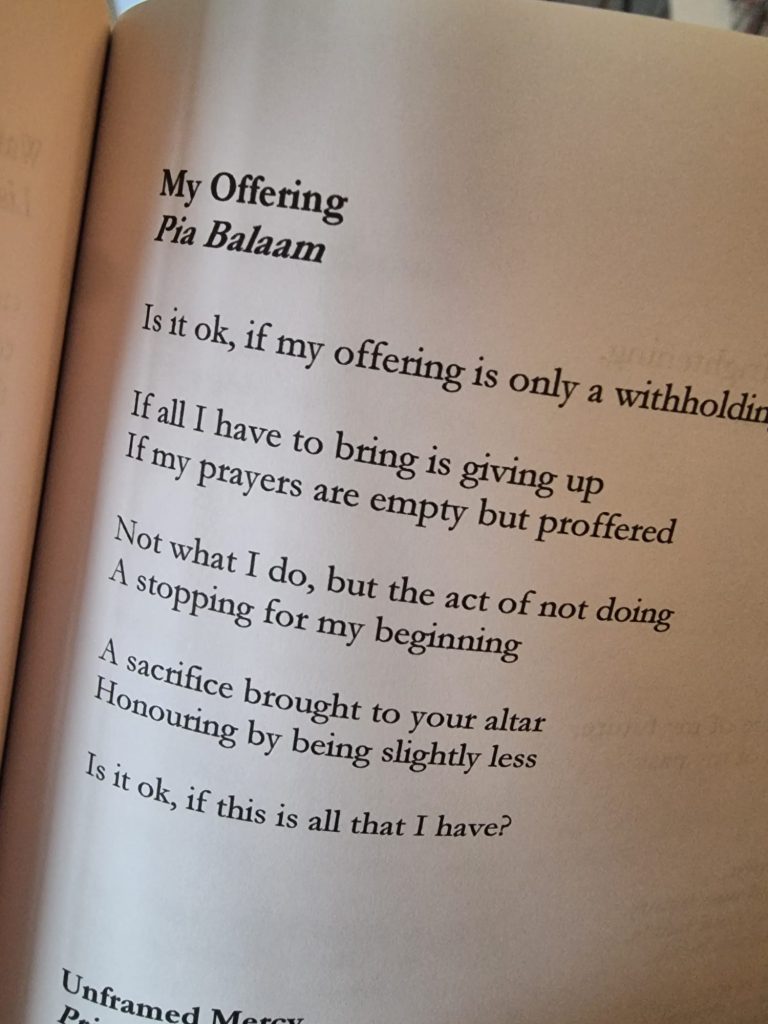
Dipping in to this anthology of poems from 2018 is a deep pleasure for me (Chris) because I always find something fresh and lovely. This collection was a labour of love, a combing and gathering of poems from so many places and people. I now know some of the poets, but I do not know Pia, who wrote today’s poem.
I love this poem because it is honest and human. It speaks of a relationship with the divine that is not manufactured, but arising from the messy reality of what our lives often become.
Steve Page is on a roll just now, and today we bring another one of his poems, one which seem more relevant than ever.
Before my enemies
(‘You prepare a table before me in the presence of my enemies’ – Ps 23)
The Lord’s Table, prepared in the presence of our differences, somewhere where we can sit side by side, or possibly face to face, with nowhere to hide – only separated by breads and fruits and meats and wine, taking our hands from our swords, and raising them, not in anger, but to toast the opportunity for respite, perchance to peace replacing the clash of blades with the meeting of cups filled from the same jars – a miracle of sorts.
I used to think the table in Psalm 23 was just for the writer – to demonsrate God’s favour on him and distain for his enemies. But a table from which the writer can offer hospitality seems more apt and more consistent to the God I know.
In my earlier life, I knew it to be the other- something away from me, that was certainly not me. I could not be it, nor was I able to be in it, not even with the promises made by substitutionary attonment. It would take more than that to make me acceptable. Nevertheless, I spent a long time trying to conjure up holy spaces with music. I was a ‘worship leader’. It was a serious, central calling on my life- it was my identitiy and almost all of my spiritual striving. I was good at it.
Then I started a journey away from those non-litutgical (yet still very litutgical) worship services, towards a totally different kind of spirituality. I started to see that thing that we call Holy in very different ways- it was not other, it was truest centre – even the truest centre of me. It was not removed, it was always present. It was not repelled by my brokenness, it was compelled by it. It was not somewhere else, it was right here.
The clues were always there- remember those words recorded as being spoken by Mary, the mother of Jesus about being a poor thing lifted into the love and glory of God? How the high were being made low and the low high?
Not long ago, most ‘worship music’ triggered me. It took me back to a place of striving towards that other holiness- the one that I could never attain. It is with deep joy now – the sort that makes me weep – that I listen to the music of The Many, whose music we are grateful to share through this lent journey. Let this wash over you;
Lead us from death to life, from falehood to truth. Lead us from despair to hope, from fear to trust. Lead us from hate to love, from war to peace. Let peace fill our lives, our world, our universe. Peace peace peace.
So we say during our Iona Community liturgy each time we meet. It always give me pause, because peace is not wafted down from heaven like some kind of miasma – it requires the consistent work of love. It is so easy to get sucked into cycles of seperation which start to sow the opposite into our lives. So easy to let the screens shield us from the humanity of the other or the visceral toxification of our planet.
What does peace making look like to you? In an age of yet another imperial war, we rightly focus on the big picture, but it is only the small and local that most of us can access or influence. But perhaps this is the point- we start where we are, in the mess of our ordinary. Love is not abstract, it is above all things, local.
Blessed are the peace makers…
Blessed are those whose find themselves No longer vindicated By the failure of others
Blessed are those whose borders lie open
And whose cartographers no longer Conspire
Blessed are those who put off Their badges of office And reveal who they are Not who they want to be
And blessed are those Who lie down like a bridge For others to walk upon
Whose sinews take the strain Of two way traffic
And blessed are those who seek peace In an age of war And speak of love In a time of revenge
Blessed are you Sons and Daughters Of the Most High God
Today, another poem from Steve Page. Heaven is a concept many of us struggle with – it is one of those abstract ideas that has perhaps been too often abused by institutional, colonised faith structures. This poem might just set you free from that kind of heaven.
Coronation heaven
You said no heart has imagined,
but you gave a few hints
of a massive mansion, a river
and a fruit tree with 12 varieties,
sprouting monthly.
You said we couldn’t imagine
what you’ve got prepared,
but I can’t imagine anything beats
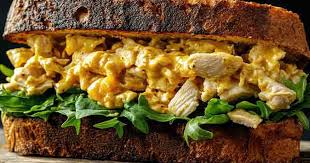
a Coronation Chicken sandwich,
with Branston,
on a warm summer’s afternoon
with friends and laughter
and Monty’s head
resting hopefully on my knee.
You called it paradise
and you mentioned wine.
If that comes with a new body –
one that doesn’t protest
to a fine Merlot
then that’ll be fine with me.
That would be paradise.
That’ll be heaven indeed.
So long as you don’t forget
the Coronation Chicken
and the pickle.
[1 Cor 2.9 … no eye has seen, nor ear heard, nor the heart of man imagined, what God has prepared for those who love him.]
a prominent UK politiion declared that there is no such thing as Islamophobia. The complexities behind this hubristic and clearly partisan statement are not the point of this post, but it will have escaped none of us that bombs are raining down on places where they worship in different ways to us. Scratch the surface (or don’t even do this) and the lie of that politician is exposed repeatedly. Those in power in the US have named their enemy. They know what the enemy looks like, and it something like the photo above.
What is the call of Jesus when religion gives cover for war? When the death of the other is seen as an acceptable political price to pay? When casual racism echoes in the corridors of power and no-one calls it for what it is, out of fear of offending the racists?
Part of my answer to this involves listening again to the voice of the other.
As a poet, I have long been drawn to the Sufi poets- mostly writing over a thousand years ago, before England was really England, and when the USA was just a distant nightmare to the people of what came to be known as America by colonisers.
Lets start with Attar.
Attar of Nishapur (1145 – 1221 ce) saint and mystic, one of the most voluminous authors in Persian literature on religious topics. His best-known work, Conference of the Birds, is an elaborate allegory of the soul’s quest for reunion with God
Intoxicated by the Wine of Love. From each a mystic silence Love demands. What do all seek so earnestly? ‘Tis Love. What do they whisper to each other? Love. Love is the subject of their inmost thoughts. In Love no longer ‘thou’ and ‘I’ exist, For Self has passed away in the Beloved. Now will I draw aside the veil from Love, And in the temple of mine inmost soul, Behold the Friend; Incomparable Love. He who would know the secret of both worlds, Will find the secret of them both, is Love.
Farid ud Din Attar – translation Margaret Smith -The Jawhar Al-Dhat
n the dead of night, a Sufi began to weep. He said, “This world is like a closed coffin, in which We are shut and in which, through our ignorance, We spend our lives in folly and desolation. When Death comes to open the lid of the coffin, Each one who has wings will fly off to Eternity, But those without will remain locked in the coffin. So, my friends, before the lid of this coffin is taken off, Do all you can to become a bird of the Way to God; Do all you can to develop your wings and your feathers.”
Farid ud Din Attar, translation by Andrew Harvey and Eryk Hanut – ‘Perfume of the Desert’
Today we point you to this lovely resource from our friend Tim Watson. It is simple, beautiful and profound – 40 thoughts/ideas/actions for reflection during lent.
Here is one of our favourites to give you a flavour;
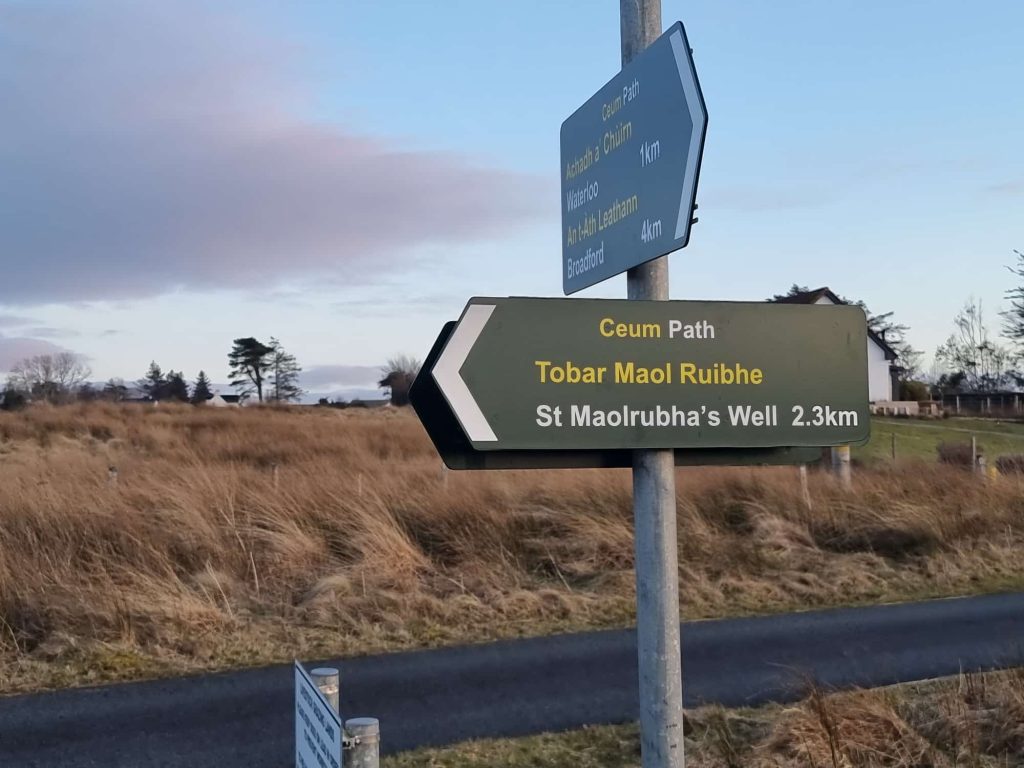
I (Chris) am on Skye just now, where we will be setting up a pop up gallery space and visiting my son-in-law’s family. They live on a croft, just along from Saint Maelrubha, second most venerated Scottish saint after St Columba himself. Maelrubha was another Irish monk, who made the journey over here 100 years or so after Columba, setting up a monastic community in what is now Appelcross, just over the water from where I now sit. In fact, legend has it that when he came over to Skye to spread the gospel, he did so by sailing over on a flat stone. Here a tall rock is remembered as his pulpit and a holy well still bears his name.
The tradition of holy wells as palces of veneration and suplication is much older than the Christ story. Around the well that bears the name of Maelrubha archeologists have dig neolithic polished axes, perhaps left by earlier worshippers as a way to persuade their version of the divine, revealed to them in th elive giving sweet water.
Scholars also trace other forms of knowing through the stories that come down to us from Celtic folk memory – ones which see everything that is and has substance, everything that breathes and moves on the earth or on the sea or in the sky, as being made and held in the mind and soul of God. In this context, the holy well is different from any other well only because it is a ‘thin place’ where the membrane between us and the great divine is thinner. Every well is a holy well, but at this one, God is more transparent.
If we can learn once more to see the world this way, how might it change our relationship with the great am-ness that we are held within?
Burning bushes
The head of this pin The hazelnut Snake and twist of kelp in the Surfing summer storm The life inside bone This feeling of home - It is all transparence
Every pool is a Sacred well Every bird is A holy dove
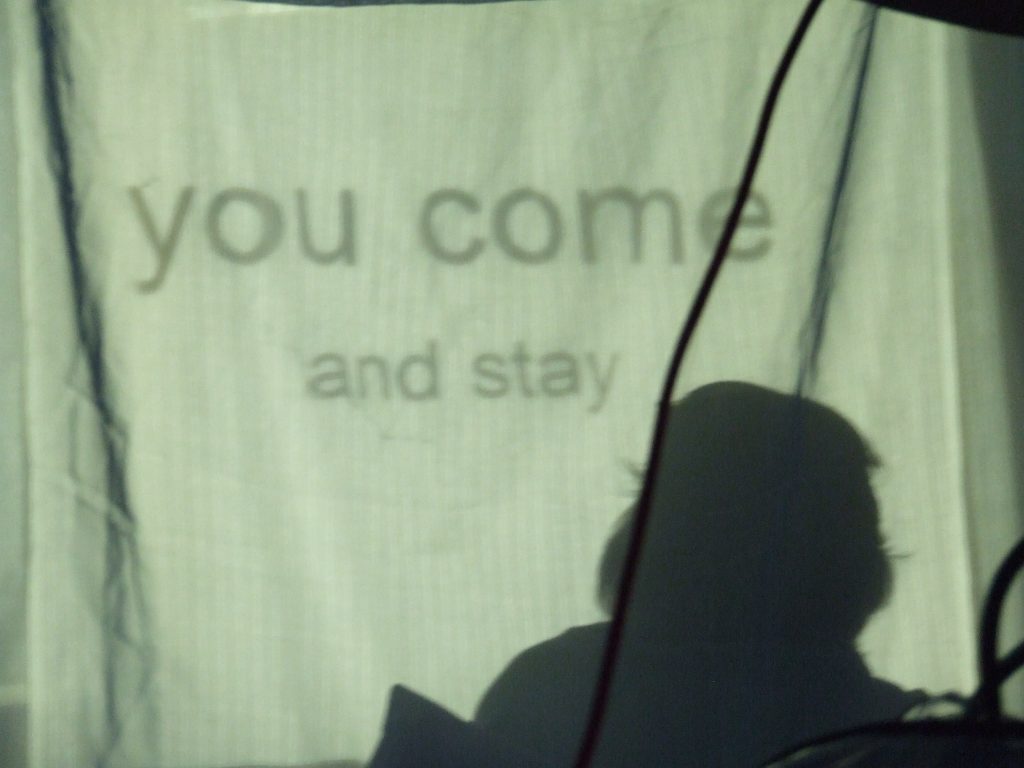
We have just heard that Si Smith’s set of now iconic images entitled ’40’ are now available again. You can get the whole set on this link. (If you would like the poetry that Chris wrote to go with the images, then drop us a line!)
As a taster, above is another image from the series, along with the accmopanying words below;
Today we welcome back Margaret Somerville, with her beautiful poem ‘Beyond’.
Margaret is the author of ‘When prayer doesn’t work’, one of the best books of prayer I have ever read. She works at the interface between different faiths, seeking to comb together stories of connection and commonality.
Beyond
In the field beyond right and wrong where we chose to sit for a while you showed me the scratches on your heart where others had not understood the way you see the world and all that lies between the muscles of survival. I told you the secrets of my belief of a god not named with words and creeds and the blank spaces where others once had sat.
Here beyond, these sharings take shape as fibers weaving into friendship gentle nods that bobble the head open hands extended eyes that scan farther than horizons with unlimited embrace.
To provide the best experiences, we use technologies like cookies to store and/or access device information. Consenting to these technologies will allow us to process data such as browsing behaviour or unique IDs on this site. Not consenting or withdrawing consent may adversely affect certain features and functions.
Functional
Always active
The technical storage or access is strictly necessary for the legitimate purpose of enabling the use of a specific service explicitly requested by the subscriber or user, or for the sole purpose of carrying out the transmission of a communication over an electronic communications network.
Preferences
The technical storage or access is necessary for the legitimate purpose of storing preferences that are not requested by the subscriber or user.
Statistics
The technical storage or access that is used exclusively for statistical purposes.The technical storage or access that is used exclusively for anonymous statistical purposes. Without a subpoena, voluntary compliance on the part of your Internet Service Provider, or additional records from a third party, information stored or retrieved for this purpose alone cannot usually be used to identify you.
Improving Our Services
The technical storage or access is required to create user profiles to send advertising, or to track the user on a website or across several websites for similar marketing purposes.