
What does mercy look like?
Who deserves it?
Is there anyone who does not deserve it?
Here is a song from our friends The Many
What does mercy look like?
Who deserves it?
Is there anyone who does not deserve it?
Here is a song from our friends The Many
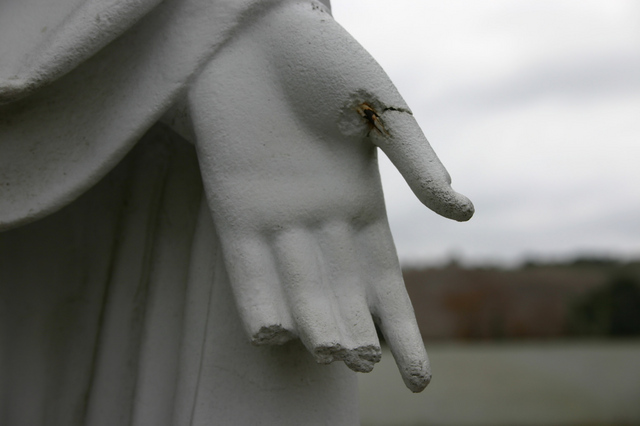
Today we are delighted to share two poems by Polly Paton-Brown, whose work we intend to share with you via our podcast soon. Her spiritual journey has taken her into deep connection with the wild,
Polly put these two poems together at a talk she gave recently, and we think they flow beautifully from yesterday’s post.
The Call comes from beyond the stone walls
Walls that have the echoes of prayers
Written into them
Beyond the carved images
Which moss and lichen reverence and tenderly
watch over
The call comes
In the harsh cry of the crow
Beyond the boundary
Into the woods
Where tumbled down walls
Are greened once again
and the three leaved clover shows the Trinity’s face.
Scrambling over mossy boulders and tangled tree roots
I sit
Breathe in the Presence
Yield to the washing of the rain
The benediction of the trees
Sister wind sighs over me
Singing her hallelujahs
‘Holly, Holy Holy is this place”I feel at peace here, amongst the trees
Surrounded by ferns and birdsong.
I feel called beyond the walls
And though my heart be touched by the carvings in stone
My soul is called to something more ancient.
My blood and cells recognise a kinship with
the greenwood
My choir, the song of blackbird and wren
My call to prayer
The beating of my own heart.
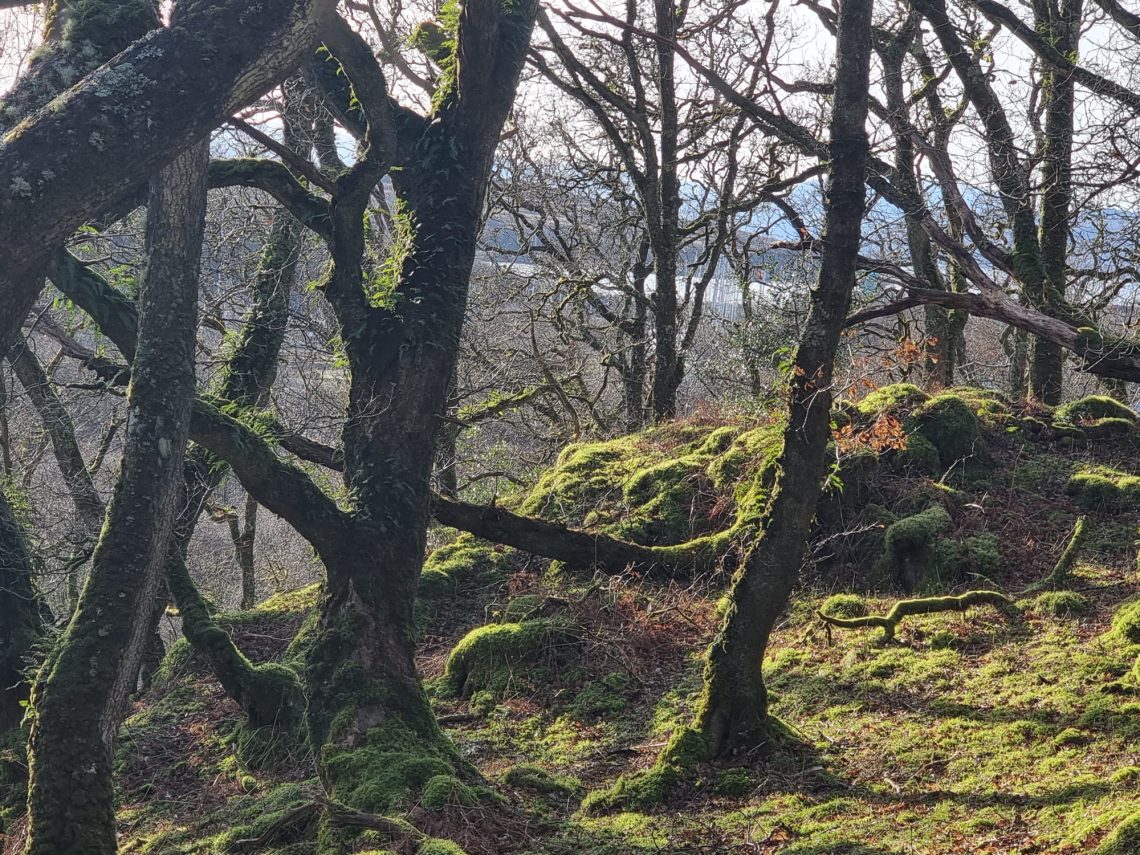

This season of lent, in tradition, is about penitence on a journey towards the cross. For me, the meaning of this sentence has shifted considerably – away from the idea of purging of impurity in order to be acceptable to a judgemental god, towards alignment with the deepest, truest, most authentic part of what I am, which is grounded and has substance in the glorious divine. Penitence then becomes about noticing those things that obscure and stop me living towards that reality, both in myself and in recognising this in my human and non-human neighbours. This kind of penitence does nor demand purity or perfection, rather it seems to thrive most beautifully in brokenness – in the mess of shared humanity, not removed from it.
One of the practices that helps many of us to engage with this reality is simply to go into wild places. There it feels possible to be alligned – to notice new connections – to that God who loves things by becoming them. This Sunday morning, I did just that. It was communion. Here is a short video and a poem from my trip.
The feathered Eucharist
Happy are those birds above who
never go to mass – those
Happy fragile feathered things with
light not stained by glass.
Blessed are they beak and claw, their air
is ever sacred.
Blessed be their treetop temple, each twig
a flying arch
and sacred is each song that choirs
from sparrows and from larks.
Happy are the crows and cranes
Whose Eucharist is endless.
And may the vaulted holy sky
be full of wings as birds fly by
on their way to ruffled worship.
(With thanks to Juan Raman Jimenez, ‘The Silversmith and I’.)
We are grateful once again that we have been given permission to share work from our friends The Many, who define themselves like this;
Drawing on indie pop and gospel influences, The Many makes music to help give voice to faith and doubt, questions and fears, laments and longings, music that speaks to a non-violent God, a Jesus who is with us and for us, and to a Spirit that can’t be easily defined or controlled.
It’s music for a movement of resistance to hatred and division, for reconciliation and restoration, and music that always reminds us “we are on this earth to love.”
These are our kind of people. Not content with making music alone, they also weave poetry with video and art, making powerful and beautiful combinations. One such is their stations of the cross resource. You can see the whole thing here, but we will be using some of them individually as this season of lent unfolds.
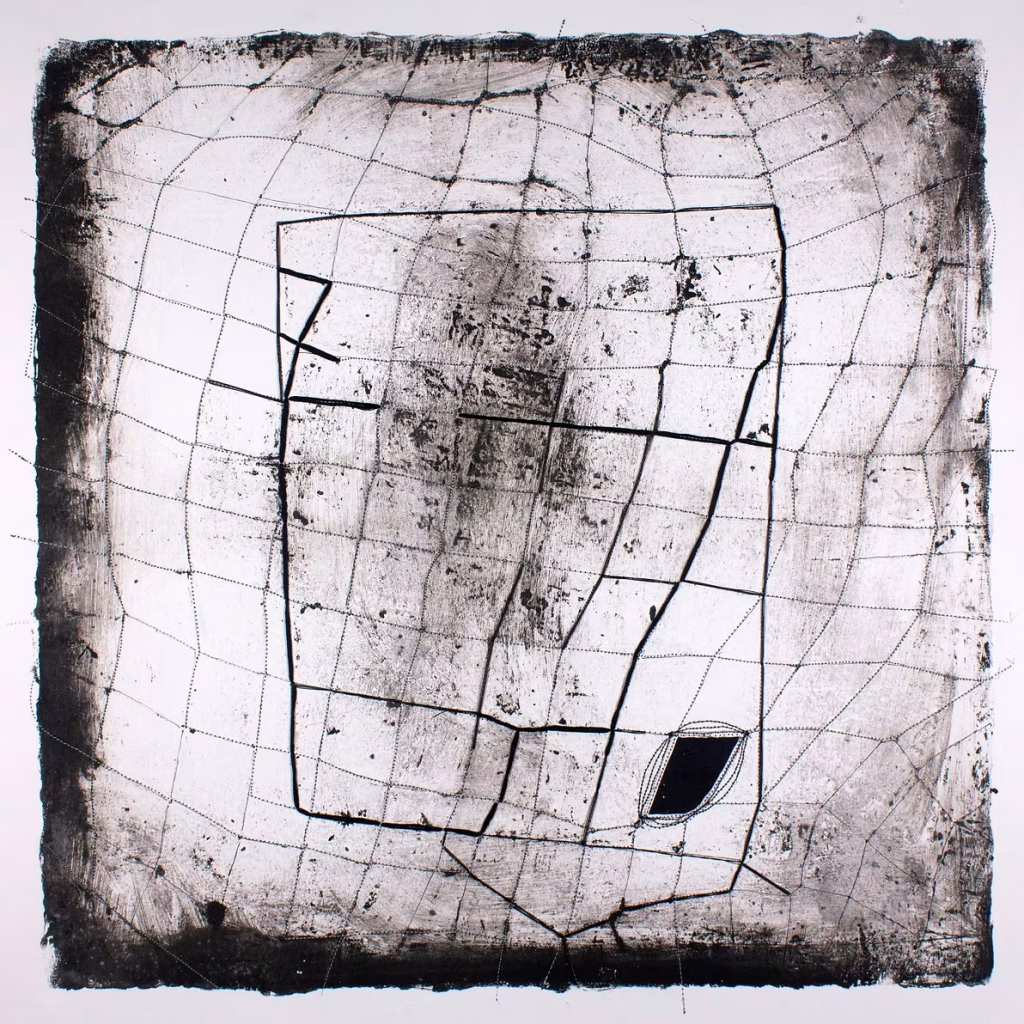
Today our focus is on the first station of the cross, in which Jesus is condemned.
The art above is by Daniel Callis (born in Long Beach, CA) is an artist and educator living in Southern California.
The many offer this prayer as a companion to Daniel’s art. You can also listen to their beautiful song ‘Remember when’
Hear our prayers for all
who have been condemned.
For what they’ve done.
For what they haven’t done.
For who they are.
For who they aren’t.
Hear our prayers for those of us who’ve done our share of condemning as well.
Hear our cries.
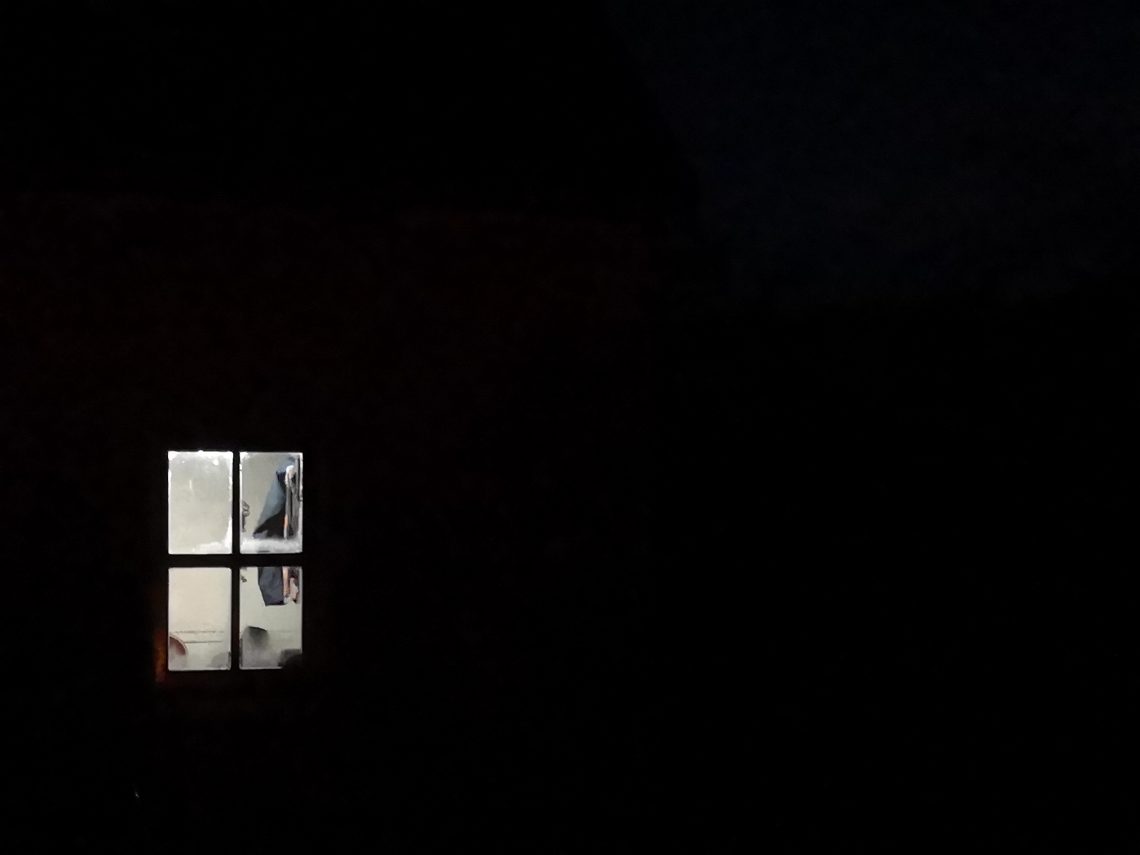
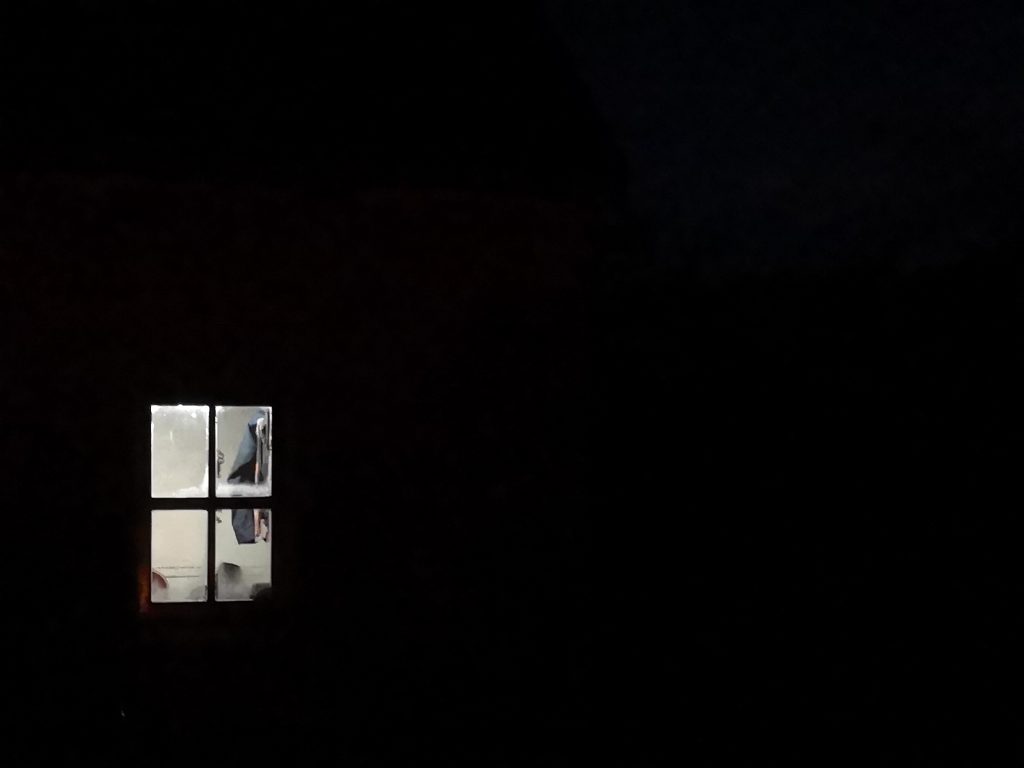
Today we are grateful to our friend Tim Watson for this stunning poem of anger and hope.
Lenten Waiting 2025
We wait in the dark
While tech bros and oligarchs
Tear the world apart
Ransoming nations
For minerals and gold
In a story so old
It plays on repeat
Century after century
.
We wait in the dark
Marked by ash crosses
Counting our losses as
Yet another dream dies
Another fire extinguishes
With no sense we’ll survive
.
We wait in the dark
Lighting candles in shadowed parks
Taking night walks
Looking for signs
Reading – praying – hoping
For something that will spark
.
We wait in the dark
Terrified of the foundations we’ve laid
Too ashamed to change our ways
The trajectory stays the same:
World-ending flames
Unless Messiah comes to save us and
Lift us out of the mire
Take us to some place higher
Where a deity with beard will draw near
.
We wait in the dark
Too sated to challenge the narrative
To break up the systems of greed
To turn to something more earthy
With Messiah on hands and knees
Planting seeds
Whispering about the dark
Never extinguishing light
No matter the length of night
.
We wait in the dark
With hope in our hearts
Laments and praises on our
Spittled speech with
Heaven just out of reach
The truth that we seek.
.
Tim Watson, 2025.
Hold on.
Hold on.
My dear friend, hear comes the dawn.
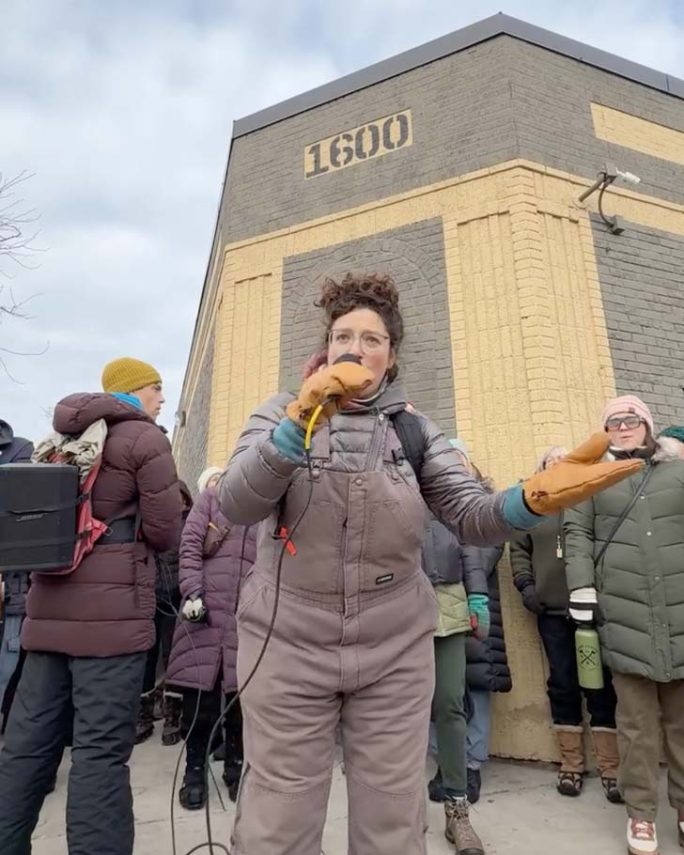
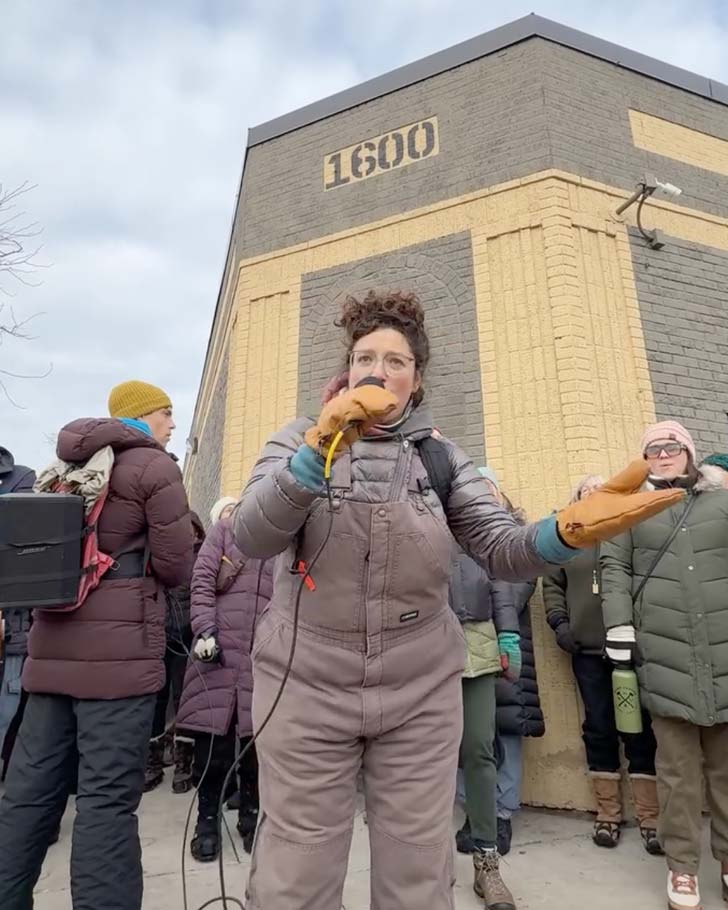
I think I will always remember the first time I saw this little clip of people singing on the streets of a besieged Minneapolis, where – in the face of a wave of heavy handed, violent and aggressive arrests of people of colour – ordinary Minnesotans came together to walk the streets and… sing.
In the face of oppression, people have always sung songs. Think of the American deep south during the Jim Crow era, or Apartheid South Africa, or the pop culture of East Berlin. How else can those without power once more express the power of community and connection?
Hold on my dear friends. Here comes the dawn.

Today, the Proost lent journey begins with a daily post. The first is a lovely selection of poems read by Emily MaGrath and Steve Page.
As ever, you can connect with this via Spotify, Youtube or Apple podcasts, or click below;

After a couple of months silence, the main Proost podcast feed has another offering, this time with Josie Gwin, whose day job is with a charity working to support recovery and resilience in communities, particuarly after major events and disasters. You can read more about the Resilience Resource here;
Josie has crammed a lot of things into her life – fire fighter, equine therapist, Police chaplain – and most recently has been undertaing a Phd at Edinburgh University using the Iona Community as material for a deep dive into how faith spaces might support – or hinder – resilience in members.
I really enjoyed this conversation and think that you will too. Josie is a great communicator and has a breadth of knowledge that plugs directly into our hopes for Proost, and how informal, non-hierarchical organisations (particularly in the arts) might have important things to offer as we continue to navigate instability and change.
You can listen on Apple, Spotify, or Youtube – just search for Proost Podcast
Here is the spotify link


Lent is almost upon us once again.
Like last year, Proost will be marking the lent journey with a daily piece of creativity- a poem, a song, a video, a prayer, a dance, a piece of music, a piece of art. We have a wonderful back catalogue that we will dip into once again, but even more, we love to connect with creatives who might want to take part.
We are looking for pieces that help us all make connections between our faith story and the times we are living through. At Proost, we think we need our artists more than ever to challenge us, to disturb those colonial hierarchies and places where we have too often been complicit with powers that are anything but benign. Let this Lent journey be part of a conspiracy towards goodness, for the sake of our human and non human neighbours.
If you are considering contributing (and we really hope you do!) then email it to us at hello@proost.community! Please feel free to attach whatever images, audio files, or video you would like to offer and we will do our best to include them.
If your files are too big, we’d recommend using WeTransfer!


The other day I had the great pleasure of making a journey into deep Argyll, over Loch Fyne by ferry (whilst it was still dark) then up to the Isle of Seil, to meet with poet, novelist and artist Kenneth Steven. The pretext of this visit was to record a podcast, but the truth is, it was about time we met! Two blokes, both about the same age, both living in Argyll, both writing poetry inspired by the spirituality of wild places – oh and we have connection to Iona and the Iona community too. How was it that we did not already know each other?
Kenneth and his wife Kristina were the perfect hosts- despite an earlier failed attempt to record over the internet which I messed up by getting the time wrong! They live in a beautiful place and I very much enjoyed our chat. We hope you do too!
You can listen on Spotify, Apple or Youtube – Here is the spotify link;
If you don’t already know Kenneth’s work, here is the blurb from his website.
Kenneth Steven is first and always a poet. To survive as a literary author he’s had to become many other things as a writer – he translated the Norwegian novel The Half Brother, he’s a children’s picture book and story writer, he’s an essayist and a feature writer – but it’s poetry and the love of poetry that lies at the heart of it all. His volume of selected poems Iona appeared from Paraclete Press in the States a couple of years ago. His numerous collections have sold many thousands of copies, and he has a strong name as a poet thanks to the poetry-related features he’s written and presented over long years: his programme A Requiem for St Kilda having won a Sony Gold for Radio 4.
His poetry has been inspired primarily by place. He grew up on the edge of the Scottish Highlands with a profound awareness of that world: his mother’s people were Gaelic speakers from Wester and Easter Ross. It’s the wildscape of Highland Scotland that pours through his pen.
It’s that same wildscape he seeks to capture as a painter. He and his wife Kristina live on the Scottish west coast, and it’s the ever-changing colours of sea and sky he loves so much: the myriad blues and the incredible beauty of the light.
Kenneth runs his own podcast, available to those who support his work through patreon- we very much encourage any of you who are able to reach out. We need out poets more than ever!
You can connect with the wonderful Imagining Things podcast here.
Kenneth’s website with links to many of his books and paintings that are available is here.
 Spotify